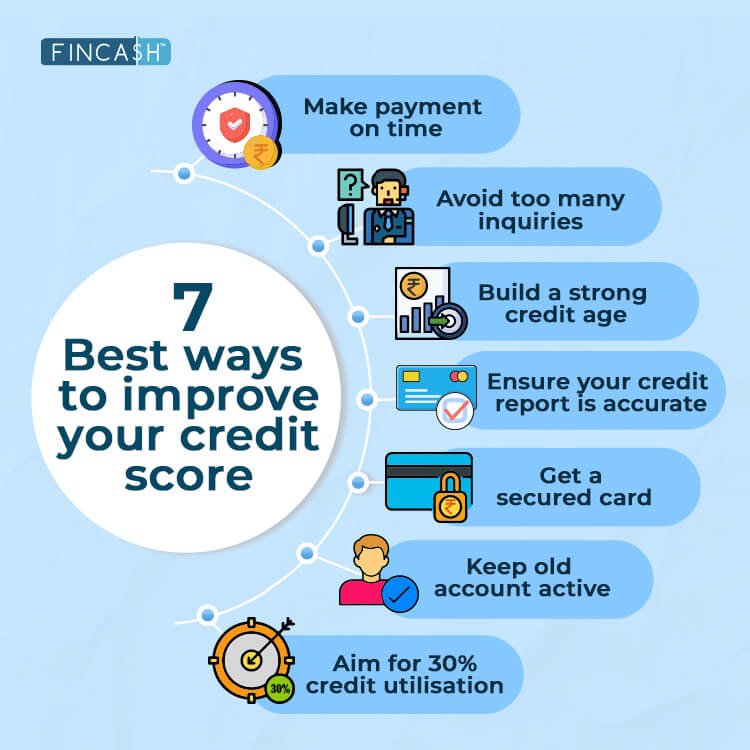
Your credit score affects far more than whether you get approved for a credit card. It can influence the interest rate on a car loan or mortgage, your insurance premiums in some states, whether a landlord approves your rental application and sometimes even utility deposits. A higher score can save you thousands of dollars over the years.
The good news is that a credit score is not permanent. With the right habits, you can raise it. This guide explains how scores work and gives you 10 practical steps to improve yours.
What Is a Credit Score?
A credit score is a three-digit number, usually ranging from 300 to 850, that estimates how likely you are to repay borrowed money. The two best-known scoring models are FICO and VantageScore. Lenders use your score, along with your income and other details, to decide whether to approve you and what interest rate to offer.
Typical score ranges look like this, though exact labels vary by model:
| Score Range | General Rating |
|---|---|
| 300 to 579 | Poor |
| 580 to 669 | Fair |
| 670 to 739 | Good |
| 740 to 799 | Very Good |
| 800 to 850 | Exceptional |
What Affects Your Credit Score?
The FICO model weighs five main factors:
- Payment history (about 35%): Whether you pay bills on time.
- Amounts owed (about 30%): How much of your available credit you are using, known as credit utilization.
- Length of credit history (about 15%): How long your accounts have been open.
- New credit (about 10%): How many new accounts or credit inquiries you have recently.
- Credit mix (about 10%): The variety of credit you manage, such as cards and installment loans.
Knowing these percentages tells you where to focus. Paying on time and keeping balances low matter the most.
Step 1: Check Your Credit Reports
Before you can fix anything, you need to see what is on your reports. In the United States, you can get free credit reports from Equifax, Experian and TransUnion through AnnualCreditReport.com, the official site. Many card issuers and banks also offer free score tracking. Checking your own report does not hurt your score.
Step 2: Dispute Errors
Mistakes are more common than people think. Look for accounts you do not recognize, wrong balances, payments marked late that were on time and duplicate accounts. If you find an error, file a dispute with the credit bureau online or by mail, and include supporting documents. Bureaus generally must investigate within a set period. Removing a real error can raise your score.
Step 3: Pay Every Bill on Time
Payment history is the biggest factor, so a single late payment of 30 days or more can hurt. Set up autopay for at least the minimum payment, and add calendar reminders for due dates. If you have already missed a payment, get current as soon as possible. Your lender may also be willing to remove a one-time late fee or, in some cases, a late mark if you have a long positive history, so it is worth asking politely.
Step 4: Lower Your Credit Utilization
Credit utilization is your total card balances divided by your total credit limits. If you have $2,000 in balances and $10,000 in limits, your utilization is 20%. Many experts suggest staying below 30%, and lower is generally better.
Ways to reduce it:
- Pay down balances, starting with the highest utilization card
- Make several small payments during the month, before the statement closes
- Ask for a credit limit increase, but only if you will not spend more
Step 5: Do Not Close Old Accounts Without Thinking
Closing an old card can reduce your available credit and shorten your average account age, which may lower your score. If an old card has no annual fee, consider keeping it open and using it for a small recurring bill that you pay in full.
Step 6: Limit New Credit Applications
Each time you apply for credit, the lender usually runs a hard inquiry, which can cause a small, temporary drop. Several applications in a short time can look risky. Apply only when you really need credit. Rate shopping for a mortgage or auto loan within a short window is typically treated as a single inquiry by many scoring models.
Step 7: Build Credit If You Have a Thin File
If you have little or no credit history, try one of these:
- Secured credit card: You deposit money as collateral and use the card like normal.
- Credit-builder loan: Offered by many credit unions and online lenders. Your payments are reported to the bureaus.
- Authorized user: A family member with good credit adds you to their card. Make sure the card issuer reports authorized users to the bureaus and the account is in good standing.
- Rent and utility reporting: Some services can report on-time rent or bill payments to the bureaus.
Step 8: Keep a Healthy Mix
You do not need every type of credit, and you should never take on debt just to improve your mix. Over time, managing both revolving credit, like cards, and installment loans, like auto loans, can help slightly.
Step 9: Handle Collections and Past-Due Accounts Carefully
If you have an account in collections, verify that the debt is yours and the amount is correct. Ask for written validation. If you decide to pay, get the agreement in writing before sending money. Scoring models differ on how they treat paid collections, so ask about your options, and be careful not to restart the clock on an old debt without understanding your state’s rules.
Step 10: Be Patient and Consistent
Negative marks fade with time, and positive habits compound. Most late payments can stay on your report for up to seven years, with their impact decreasing as they age. You may see small improvements within a few months of better habits, while larger rebuilding after serious problems can take much longer.
Credit Myths
- “Checking my own score hurts it.” No. These are soft inquiries.
- “Carrying a balance helps my score.” No. You do not need to pay interest to build credit. Paying in full is best.
- “Income affects my score.” Income is not part of your credit report, although lenders consider it separately.
- “Credit repair companies can do magic.” They cannot remove accurate negative information. Be careful of anyone promising quick fixes for a fee.
A Sample 90-Day Plan
Days 1 to 7: Pull your reports, list all accounts and dispute errors.
Days 8 to 30: Set up autopay and calendar reminders. Pay down your highest-utilization card.
Days 31 to 60: Reduce balances further and avoid new applications.
Days 61 to 90: Review your reports again, check your progress and decide on next steps such as a credit-builder loan if needed.
Frequently Asked Questions
How long does it take to improve my credit score? Small changes can show within one or two billing cycles. Bigger improvements take months or years.
Does paying off a loan hurt my score? Sometimes there is a small temporary dip when an account closes, but paying debt off is financially positive.
What is a good credit score? Scores in the high 600s and above are generally considered good, and scores above about 740 usually unlock the best rates.
Final Thoughts
A better credit score comes from basic habits done consistently: pay on time, keep balances low, check your reports and avoid unnecessary new debt. You do not need tricks. Start with your free credit reports this week, fix what is wrong and build good habits from there.
Disclaimer: This article is for educational purposes only and is not personalized financial or credit advice. Scoring models and rules change over time.
No responses yet